
Creed Aventus Review: 9.1 and the Batch Lottery
How we're funded

Creed Aventus (2010) is the fruity-smoky icon of men's fragrance: juicy pineapple over smoky birch, with an editorial score of 9.1. It lasts 8 to 10 hours, projects hard and pulls compliments like few others. It is expensive and batch-variable; if the price stops you, Club de Nuit Intense Man copies about 80 percent for a fraction.

Few fragrances carry as much baggage as Aventus. For over a decade it has been the yardstick of men's perfumery, the bottle everyone tries to clone and the name that comes up in any talk about scents that "smell expensive". That fame cuts both ways. Some worship it without ever having smelled it calmly, and others dismiss it just for being popular. This verdict sits on the 37 sheets we track, cross-checked against a decade of community votes and evaluated with the published method, so the opinion here does not lean on the logo or the price tag.
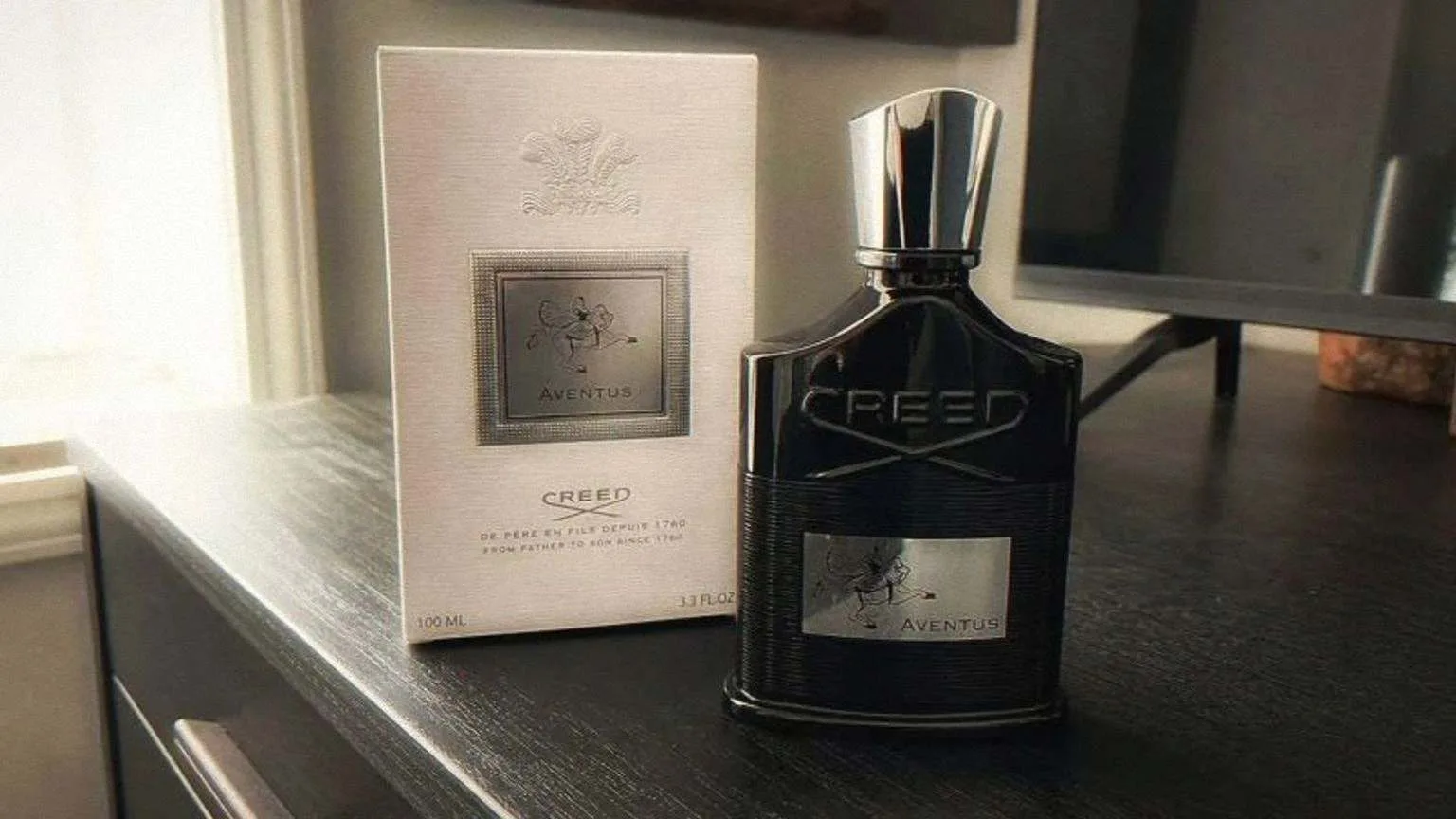
The honest summary is this: Aventus is very good at what it does, and what it does pleases almost everyone. It is not a difficult or cerebral scent. It is pleasant, bright and recognizable, with an elegance that explains why it has been copied non-stop for years. The smell is not the problem. The problem is what it costs and how unevenly one bottle can perform versus the next. My editorial score sits at 9.1, and I want to spend the rest of this review explaining exactly what earns those points and what costs it the last fraction.
The house, and why Aventus matters so much
Creed launched it in 2010 and, almost by accident, reshaped the direction of men's perfumery for the decade. The pairing of bright fruit and dry smoke turned out to be so addictive that half the market set out to chase it. From Arabic houses to designer brands, everyone wanted their take on the smoky pineapple. When a single fragrance spawns a whole industry of imitations, it clearly did something right.
Creed itself is an old name that trades hard on a heritage story, and you can debate how much of that lore holds up. What is not up for debate is the position the house held before Aventus and the one it held after. Green Irish Tweed and Millesime Imperial were respected among enthusiasts, but they were insider picks. Aventus took the brand out of the niche corner and put it on the radar of men who had never thought about fragrance as a hobby. It became the scent a guy buys when he gets his first real paycheck, the bottle gifted at graduations and weddings, the one a barber or a coworker compliments and you suddenly want to know the name of. That cultural reach is part of what you are paying for, and it is worth being honest that prestige is baked into the price alongside the juice.
It helps to understand what you are buying before you spend. You are not buying an oddity or an insider secret. You are buying the original of a profile you already know even if you think you do not, because you have smelled it a hundred times on other people under other names. What you pay for is the materials, the finish and, let us be honest, part of the prestige of the label. If that sits well with you, you will enjoy the bottle. If you expect to have your mind blown by something never smelled before, set your expectations.
A word on the format. Aventus is an eau de parfum, and the standard sizes run from a small bottle up to the larger flacons that bring the per-milliliter cost down a little. There is also the Cologne flanker and a long list of limited editions and "Les Annees" anniversary batches that chase collectors. For a first bottle, ignore all of that. The regular EDP is the reference, and everything else is a variation you only need once you already know you love the base.
It is also worth understanding why Aventus landed when it did. The late 2000s men's market was crowded with two camps: the loud, sweet, aquatic-and-spice crowd-pleasers on the designer shelf, and the serious, often challenging niche releases aimed at hobbyists. Aventus threaded the needle. It was clearly a cut above the designers in materials and complexity, yet it was immediately likeable in a way most niche scents were not. That accessibility is the real innovation. A lot of people credit the smoky pineapple, but plenty of fragrances have smoke or fruit; what almost none of them had was that combination delivered in a package a complete beginner could love on first sniff while a seasoned collector still respected the craft. That dual appeal is why it crossed over from forums into general culture, and it is the reason the clones that copy only the smell, and not the polish, never fully replace it.
How it smells, phase by phase
The opening
It opens with the best pineapple in all of perfumery. Not the sweet pineapple of a juice box, but a juicy, slightly tart fruit, with blackcurrant and a touch of green apple keeping it fresh. Bergamot adds shine on top. It is a bright, optimistic opening that almost anyone warms to, and it is responsible for the great first impression people rave about.
Let me break down what is actually happening in those first ten minutes, because the blend is cleverer than it gets credit for. The blackcurrant (cassis) is the secret ingredient. On its own it can smell catty and tart, almost like a sharp berry skin, but here it pulls the pineapple away from sweetness and gives it that slightly fizzy, unripe edge that reads as expensive rather than fruity. The bergamot is the polish on top, a clean citrus shine that keeps the whole thing from feeling like dessert. There is a faint green apple too, more texture than a clear note, that adds crispness. Put together, the opening smells like fruit that has just been cut, not fruit that has been candied.
Those first minutes are the most seductive. If you test it in a shop and the opening wins you over, keep in mind that the scent will change a fair bit from here. What you fall for at the start is not exactly what you will be wearing three hours later. This is the single most common buyer's regret with Aventus: people fall for the top notes on a blotter, buy the bottle, and feel let down when the drier heart shows up on skin. Smell it on skin, give it an hour, and judge it then.
The heart
Now the birch enters, and with it the famous smoke. It is not a campfire smoke but something drier and cleaner, almost like burnt paper or a tasteful smoky touch. Underneath, a discreet jasmine and rose round out the fruit and keep the whole thing from turning aggressively masculine. Patchouli starts to darken the base without stealing the show.
The birch is the soul of Aventus and the hardest part to copy. Birch tar, used carefully, gives a smell that sits between smoke, leather and something faintly medicinal, like a freshly struck match held a foot from your nose. The trick Creed pulled off is dosing it so it reads as clean and dry rather than ashy or tarry. Get it slightly wrong and you have a campfire; get it right and you have what people call "smelling expensive". The floral pair underneath does quiet but real work. The rose and jasmine are not there to be smelled as flowers; they soften the join between the fruit and the smoke so the transition never feels like two separate fragrances bolted together. That seamlessness is the craft you are paying for.
This phase is what separates Aventus from any supermarket fruity fresh. The contrast between the bright pineapple and the dry smoke is what gives it character, and it is what most clones never quite nail. They get the fruit right and miss the smoke. Or they get a smoke that is harsher and more synthetic, which works in a room but falls apart up close.
The drydown
Over the hours it settles onto oakmoss, musk and a hint of ambergris, with a very restrained vanilla softening the edges. It is a clean, elegant and quietly sophisticated base, closer to the skin than the opening but still noticeable. This is not a dark or heavy drydown. It stays true to its bright character to the end.
The oakmoss is what gives the base its grown-up, slightly woody-green underpinning, and the ambergris (or its synthetic stand-in) adds a salty, skin-like warmth that makes the whole thing smell like it is coming from you rather than from a bottle. The vanilla is dosed so lightly that most people never name it, but pull it out and the base would feel thinner and sharper. By hour six or seven you are left with a soft, fruity-musky skin scent that is genuinely pleasant to catch on your own collar. It is one of the better-behaved drydowns in the genre because it never turns cheap or sour the way a lot of fresh fragrances do as they fade.
If you want the answer without the pyramid jargon, the plain-language guide to what Creed Aventus smells like anchors all three phases to everyday smells.
Real-world performance
Here Aventus delivers without showing off. Across wear reports it lands at around eight to ten hours on normal skin, which for such a fresh, fruity profile is a very good result. Sillage (the trail you leave behind) and projection (how far it carries when you stand still) are strong in the first hour: people who cross your path will notice. After the third or fourth hour it drops to a close skin aura that holds for most of the day. The dedicated guide to how long Creed Aventus lasts charts that curve hour by hour.
Let me break performance down by the variable, because "how long does it last" depends on far more than the juice.
Longevity. Expect eight to ten hours on most skin from a recent, well-performing batch, with the last few hours being a close skin scent rather than something that fills a room. A weaker batch or very dry skin can pull that down to six or seven. If you need it to last into the evening, that is a real consideration.
Sillage and projection. The first sixty to ninety minutes are the loudest, when the smoky birch is fully open and the fruit is still bright. This is the window where strangers comment. By hour three or four it has pulled in to roughly an arm's length, and by the back half of the day it is a scent people notice when they lean in, not across a table.
Dry versus oily skin. This matters more than people admit. Oily skin holds fragrance oils far better, so the same two sprays can read an hour or two longer and a notch louder on oily skin than on dry. If your skin runs dry, moisturize with an unscented lotion before you spray. It is the cheapest performance upgrade there is.
Heat, cold and humidity. Warmth lifts a fragrance off the skin, so in summer Aventus projects more and burns through a bit faster. Cold air keeps it closer to the skin and slows the burn, which is why it can feel quieter (but longer-lasting) in winter. Humidity tends to amplify projection, dry air mutes it. None of this changes the smell much, only how far it travels and for how long.
Number of sprays. Two sprays are plenty for a full office day. Three if you want to leave a trail on a night out. A fourth rarely adds noticeable distance and mostly just shortens the time before people stop smelling it on you, since you go nose-blind to your own scent. More is not better here.
Skin versus clothes. Sprayed on skin, you get the full evolution and the warm, intimate drydown, but slightly shorter total life. Sprayed on a shirt or jacket, projection is gentler and the scent can cling for a day or more on the fabric, though you lose some of the warm base notes that need skin heat to bloom. For a scent-sensitive office, one spray to the chest under a shirt is the polite move.
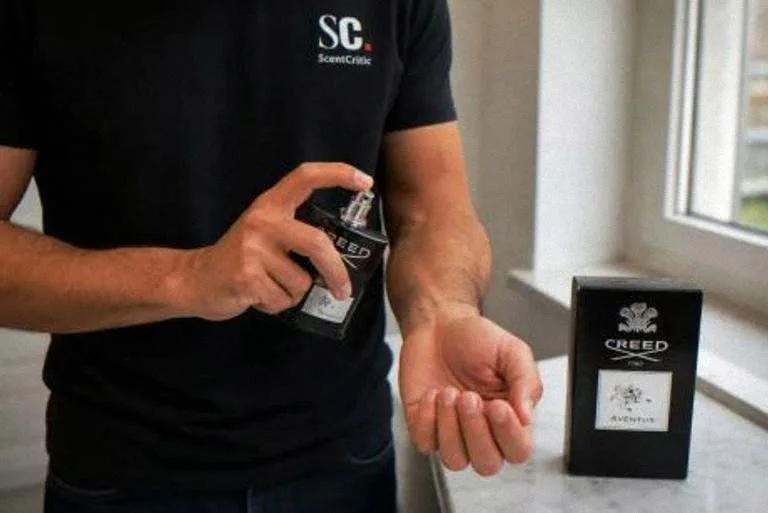
If you draw a weak batch or your skin just eats fragrance, you have a few levers before you give up. Moisturize first; hydrated skin holds scent far longer than dry skin, and an unscented lotion under the spray is the single biggest fix. Spray onto pulse points where the skin runs warm (chest, neck, inner forearms) rather than only your wrists, which you rub and wash. Add a spray to clothing, which acts as a reservoir and keeps the scent going long after it has faded on skin. And do not rub your wrists together; that crushes the top notes and does nothing for longevity. None of this turns a flat batch into a beast, but it reliably buys an extra hour or two and more consistent projection. Two bottles bought at different times can smell similar but perform differently, with one projecting like a cannon and the other sitting a little flatter. This is not a forum myth, it is a known trait of Aventus. For that reason, and because of the price, my advice is clear: try a decant or sample from a recent batch before committing to a full bottle.
When and how to wear it: a season and occasion guide
Its comfort zone is wide: spring, summer and fall, day and night. That versatility is one of its strongest arguments. It works in an office without bothering anyone, at a business lunch, on a daytime first date and at dinner. Fruity-smoky is one of those profiles that rarely feels out of place. Here is how it earns its keep across the calendar and the clock.
Spring. This might be its best season. The bright fruit suits the lighter, warmer days perfectly, and the smoke keeps it from feeling generic. Two sprays for the day, daytime or evening, work for almost anything.
Summer. It holds up in heat better than most fragrances of its weight. The citrus and pineapple stay fresh rather than turning syrupy. Go easy, two sprays, because warmth amplifies projection. Excellent for daytime errands, brunch, a casual date. For a sweaty club night it can feel a touch heavy, but it never becomes offensive.
Fall. The smoky birch comes into its own as the air cools. This is when the heart smells richest, and it pairs beautifully with knitwear and jackets. Daytime to evening, work to dinner, it all fits.
Winter. Its weakest season, but only relatively. The cold dulls the bright top, so it reads a little quieter and more skin-bound. It still works for a daytime office or a casual weekend; for a cold formal evening you might want something with more warmth and depth. If winter is your main wearing season, an extra spray and a hit to clothing compensate for the cold air keeping it close, and the smoky birch actually reads nicely against wool and leather. Just do not expect the summer projection in January.
By occasion. For work, two sprays, ideally with one to the chest so projection stays courteous. For a date, two to three sprays, daytime or evening, this is one of its strongest use cases because the compliment rate is high. For a formal event, it is appropriate but not the most dressed-up option; it leans approachable rather than black-tie serious. For casual weekends it is close to ideal. For the gym, skip it, you will sweat through it and waste expensive juice; use a cheap fresh scent there instead.
Day versus night. Aventus is fundamentally a daytime fragrance. The bright fruit and clean smoke read best in daylight and in warmer hours, which is why it shines for lunches, daytime dates and the office. It does not become wrong at night, but next to the rich, sweet, oud-and-vanilla scents most men reach for after dark, it can feel a little reserved. If your evening is casual, it is perfect; if it is a heavy formal night in winter, it is not the obvious choice. The simple rule: give Aventus the daylight hours, and save the denser scents for cold nights out.
Layering and combinations
Aventus is a complete fragrance and does not need help, so my default advice is to wear it on its own. That said, a couple of combinations come up often in the community and are worth knowing. A clean white musk or a simple ambroxan-driven scent underneath can extend the base and add a soft skin warmth without fighting the pineapple. Some people layer it over an unscented or lightly scented lotion purely for longevity, which is the safer move. What I would avoid is stacking it over another loud, sweet fragrance; the birch and the competing sweetness tend to clash and you lose the clean contrast that makes Aventus worth wearing in the first place. If you want to experiment, do it on a low-stakes day, not before an event.
Who it is for, and who it is not
It is an easy recommendation if you want a versatile scent that works for almost everything and earns compliments effortlessly. Also if you value the materials and do not mind paying for the original instead of an imitation. And if you are getting into fragrance and want the fruity-smoky reference in your collection, this is the logical starting point. If the price is the sticking point, the dedicated verdict on whether Creed Aventus is worth it runs the value math buyer by buyer.
Do not buy it if the budget is tight and you only care about the smell, because the clones give you almost everything for far less. Nor if it frustrates you to pay a lot and risk a batch that does not perform as hoped. And if you already own Club de Nuit Intense Man and you are happy, the upgrade the original offers may not justify the price gap for your nose. One more group should think twice: anyone chasing a signature scent that feels personal and uncommon. Aventus is many things, but rare is not one of them, and if being recognized as "the Aventus guy" would bother you, look elsewhere.
How it stacks up against its rivals
Aventus does not exist in a vacuum, and the smartest way to judge it is against the scents people actually cross-shop. Here are the comparisons that matter.
Versus Club de Nuit Intense Man (Armaf). This is the comparison everyone wants. CDNIM chases the same fruity-smoky idea and gets remarkably close in a room, especially in the opening and the first hour of projection, which is often louder than the original. Where it falls short is refinement: the smoke is more synthetic and a touch sharper, the pineapple-birch transition is less seamless, and the drydown is less elegant. CDNIM is the value champion of the entire genre. Aventus is the polished original. Both are good; the gap is in finish, not concept.
Versus Dior Sauvage. Sauvage is the other fragrance new buyers consider in this price-and-popularity conversation, but they are not really alike. Sauvage is a fresh, peppery, ambroxan-forward crowd-pleaser built for sheer reach and mass appeal. Aventus is more textured and more grown-up, with the fruit-and-smoke complexity Sauvage does not attempt. If you want maximum compliments with zero risk and a friendlier price, Sauvage is the safer pick. If you want something with more character that still pleases, Aventus wins.
Versus Montblanc Explorer. Explorer is one of the better budget interpretations of the Aventus DNA from a mainstream designer, leaning on a similar bergamot-and-woody framework with a hint of the smoky-fruity vibe. It is cleaner and more affordable, but also flatter and more linear, without the bright pineapple top or the distinctive birch. It is a sensible cheaper alternative if you like the idea more than the specifics.
Versus other Creed scents. Within the house, Green Irish Tweed and Aventus are the two everyone names. GIT is a soapy, green, fougere-style classic that smells more old-school and more formal. Aventus is the more modern, more universally liked of the pair. If Aventus feels too popular for you, GIT is the connoisseur's alternative from the same house, though it has its own legion of clones now too.
Versus Initio Oud for Greatness or Parfums de Marly Layton. These come up when people graduate from Aventus and want the next expensive crowd-pleaser. They are richer, sweeter, more night-oriented scents, where Aventus is brighter and more all-purpose. They do not replace Aventus so much as cover the occasions where Aventus runs a little light, mainly cold formal evenings. If you find yourself reaching for Aventus daily and wanting something with more weight after dark, that is the direction to explore, not a reason to pass on Aventus.
US market reality: oversaturation and the blind-buy trap
This deserves its own section because the situation in the English-speaking enthusiast world is specific. Aventus has been the default "smell expensive" recommendation in American barbershops, on Reddit, and across YouTube for so long that the profile is genuinely oversaturated in the United States. Walk through any business district or upscale bar in a major US city and you will smell it, or a clone of it, more than once a night. That ubiquity changes the calculus in two ways.
First, the compliment value has softened slightly compared to a decade ago, simply because so many people now recognize the smell and even mistake it for a clone. You will still get compliments; you will just no longer be the only person in the room wearing it. Second, the sheer demand has made the US a hotbed for counterfeits and for old, badly stored stock dumped on online marketplaces. The blind-buy trap is real here: a new enthusiast watches a glowing review, finds a marketplace listing that undercuts the boutique price, and ends up with a fake or a tired batch that confirms none of the hype. If you are buying in the US, treat any large discount as a warning sign, lean on the decant and split community to test a verified recent batch first, and accept that you are buying a modern classic rather than a hidden gem.
Who it is for, revisited through value
Pros
- The best pineapple in perfumery, fresh and juicy
- An elegant, recognizable fruity-smoky contrast
- Excellent versatility across seasons and occasions
- A proven compliment magnet for over a decade
Cons
- Niche price that is hard to justify on smell alone
- Uneven batches: performance varies bottle to bottle
- So widely cloned that it no longer feels exclusive
- Deep winter is not its best terrain
The clone question
You cannot talk about Aventus without talking about its imitations, because they are part of its story. The most famous is Armaf Club de Nuit Intense Man, which reproduces the fruity-smoky vibe at a very high similarity for a tiny part of the price. It is not identical: the smoke is more synthetic and the pineapple-birch opening is less crisp. But the overall effect in a room is very close, and for many people that is more than enough.
- ArmafClub de Nuit Intense ManFull review →
The most famous clone, for under 10% of the price.
Where it falls short: The smoke is more synthetic and the pineapple-birch opening less crisp than the original.
Match80%
Clones match the general vibe, not necessarily the exact drydown or longevity. Price is confirmed at the store.
The honest question is not whether the clone smells good, because it smells very good. The question is how much you value that last step of quality, refinement and reliable longevity. If the answer is "a lot", the original earns it. If it is "not that much", save your money and enjoy the Armaf without guilt. There is a middle path worth naming too: own the clone for daily, sweaty, high-spray-count wear where you would never want to burn through expensive juice, and own a smaller bottle of the original for occasions where you want the finish to be perfect. Plenty of enthusiasts run exactly that two-bottle setup.
It is worth understanding why the clone field exists at all, because it tells you something about the original. Aventus is one of the most reverse-engineered fragrances in history. Beyond Club de Nuit Intense Man, the Arabic and budget designer houses have produced dozens of interpretations, and they fall into rough tiers. The top tier gets the overall vibe and the projection right but compromises on the smoke or the smoothness. The middle tier nails the pineapple top and then collapses into a generic woody base after an hour. The bottom tier just borrows the name recognition and smells like a sweet fruity scent with none of the smoke. The reason none of them has fully dethroned the original is that the hard part to copy is not the fruit, which is cheap and easy, but the dry, clean birch and the seamless transition between phases. That is the part that needs better raw materials and more careful formulation, and it is exactly the part the budget price has to cut. So when people say a clone is "the same", they usually mean the same in the first ten minutes and in a crowded room, which is true, and not the same up close over a full day, which is also true. Both statements can coexist, and which one matters depends entirely on how you wear fragrance.
The wider field gets scored one by one in our guide to the best Creed Aventus clones. Two head-to-heads go deeper still: Aventus vs Club de Nuit Intense Man covers the closest clone, and Aventus vs Afnan Supremacy Not Only Intense the extrait challenger. For the cold numbers, the clone-fidelity data measures pair by pair how much each imitation actually keeps.
Buying smart: decants, batch codes and authenticity
Most of the disappointment people report with Aventus traces back to one avoidable mistake: blind-buying a full bottle from an unknown, possibly old batch. The fix is cheap. Grab a decant or a sample from a recent batch first and wear it for a couple of days before you commit.
Batch codes are printed on the box and the bottle, and the enthusiast forums keep running tabs on which recent batches perform. You do not have to track any of that yourself. Buy from a seller with fast turnover so the stock is fresh, glance at the batch code against recent reports, and size up to a full bottle only once you know how that juice sits on your own skin. The split and decant community exists for exactly this reason, so use it. Do that and the batch lottery stops being a gamble and becomes a quick check.
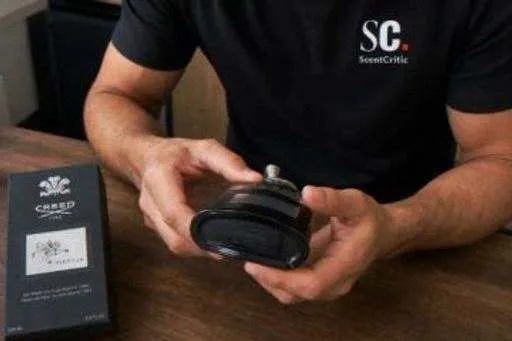
Authenticity deserves its own warning. Aventus is one of the most counterfeited fragrances on earth, and the fakes have gotten good. A convincing fake can pass a quick glance at the box but will smell thin, go synthetic fast, and die in a couple of hours. Protect yourself with a few habits. Buy from the boutique, a department store such as Sephora, or a seller you can verify rather than a random marketplace listing with a price that looks too good. Check the batch code against community databases. Inspect the build quality of the bottle and the magnetic cap, the print quality on the box, and the way the juice colors. And if you are buying a decant, buy from a well-reviewed splitter, not an anonymous seller, because a decant is only as honest as the person who filled it. The genuine article is expensive enough that paying a little less for a fake you cannot return is a bad trade.
For the complete checklist, from batch code to seller history, see the guide to spotting a fake fragrance online before you order.
A note on storage, since it affects what you get and what you keep. Aventus, like most fragrances, hates heat, light and big temperature swings. A bottle that sat in a hot warehouse or a sunny shop window for a year can smell muted and turn faster than a fresh one, and some of the "weak batch" complaints online are really storage damage rather than a bad production run. Once it is yours, keep it in its box, away from a steamy bathroom and direct sun, and it will hold for years. If you buy a decant to test, use it within a few months; small atomizers expose the juice to more air and it degrades quicker than a sealed bottle.
On value, here is how I think about the math without quoting numbers. The original carries a clear premium over the best clone, and that premium buys you three things: a cleaner, more natural smoke; a more seamless blend; and, on a good batch, more reliable longevity. If those three things matter to you on a fragrance you will wear constantly, the per-wear cost over years is reasonable, because a bottle this size lasts a long time at two sprays a day. If they do not, you are paying a large markup for a difference most strangers will never register, and the clone is the rational choice. Neither answer is wrong; the trap is paying the premium and then not actually caring about what it bought. Decide which camp you are in before you spend, not after.
Verdict
Aventus has earned its status the hard way. It is an excellent, versatile, likeable fragrance that does what it promises and still turns heads more than a decade after launch. The only thing keeping it from being an automatic buy is its price combined with the batch lottery. So my recommendation is to sample a recent batch first, confirm that bottle performs, and then buy it with confidence. That is exactly why my stance is to try before you buy rather than blind-buy, and why the score lands at 9.1 instead of a perfect mark: the smell is close to flawless, but the ownership experience asks more of you than it should.
Frequently asked questions
How many sprays does it need?
Two are enough for a normal day and project well in the first hour. If you want a trail on a night out, go to three. It is a performer, so you do not need to overdo it for people to notice.
Do the batches really vary that much?
Yes, it is a known trait of Aventus, not a forum rumor. Two bottles from different times can smell similar yet perform differently. That is why you should sample a decant from a recent batch before buying the full bottle.
Can you blind buy Creed Aventus?
I would not. Most people like the smell, so that part is safe, but the batch lottery means a blind full bottle can land flat. Get a decant from a recent batch, confirm it performs on your skin, then buy the bottle with confidence.
Has Aventus become too common to wear?
It is everywhere, and the clones made the profile even more familiar, so it no longer feels like a discovery. That does not make it smell worse. If you want something nobody else has, look elsewhere. If you want a scent that simply works and earns compliments, its popularity is a feature, not a flaw.
Is it worth it over Club de Nuit Intense Man?
It depends on how much you value refinement and reliable longevity. The original has better materials and a cleaner smoke. The Armaf gives 80 percent of the effect for a fraction. If the smell is all you care about, the clone is the sensible buy.
Is it good for summer?
Yes, and quite well. The pineapple and citrus freshness handle heat without turning heavy, something few fragrances of its intensity manage. It is one of the more heat-friendly fruity-smoky scents.
Is it office appropriate?
It is, with a light hand. At two sprays it is present but not invasive, and its likeable profile rarely bothers people. If your workplace is very scent-sensitive, apply it to clothing only to soften the initial projection.
How do I read an Aventus batch code?
The code is a short alphanumeric string printed on the bottom of the box and etched on the bottle. Enthusiast databases map those codes to approximate production dates and to community reports on how each batch performs. You do not need to decode it yourself; just cross-check your code against a recent batch list before or right after buying, and prioritize stock that lines up with a well-regarded recent run.
How do I spot a fake Creed Aventus?
Fakes usually give themselves away by performance: a counterfeit smells thin, turns synthetic within the hour, and dies fast. Physical tells include sloppy box print, a weak or wrong magnetic cap, off-color juice, and a batch code that does not match any real record. Buy from the boutique, a department store, or a verifiable seller, and treat a suspiciously cheap "new sealed" listing as a red flag.
Is Creed Aventus worth the money?
It depends on what you weigh. On smell and craft alone it is excellent and arguably worth it. On pure cost-per-compliment, the clones undercut it badly, so the value case is weakest if you only care about the effect in a room. My honest take: it is worth it if you value the refinement and the original, and a poor value if you are chasing the cheapest path to the profile.
Has Aventus been reformulated?
Aventus shifts subtly batch to batch, which is part of why people obsess over batch codes, but it has not had a single dramatic reformulation that ruined it the way some classics have. The smell you get today is recognizably the same fragrance launched in 2010, with normal variation in strength and balance from one production run to the next.
Is it too popular to be a signature scent?
For some people, yes. It is everywhere, and the clones spread the profile even wider, so wearing it will not feel personal or rare. If a signature scent means something nobody else has, this is not it. If it means a reliable smell that is yours by habit and that you love, popularity does not disqualify it.
How does Aventus compare to Dior Sauvage?
They get cross-shopped but they are different animals. Sauvage is a fresh, peppery, ambroxan-driven crowd-pleaser built for maximum reach at a friendlier price. Aventus is more textured and more grown-up, with the fruit-and-smoke complexity Sauvage does not attempt. Want the safest possible compliment-getter for less money, pick Sauvage; want more character, pick Aventus.
Is Aventus unisex?
It is marketed to men and leans masculine, but the fruity-smoky profile is not aggressively so, and plenty of women wear and enjoy it. There is a separate Aventus for Her, which is a different fragrance rather than a lighter version of the men's. If you like the original on your own skin, wear it regardless of the label on the box.
Should I buy a bottle or a decant first?
Start with a decant or sample, every time. Because of the batch lottery and the price, a decant from a recent, well-reviewed batch lets you live with the scent for a few days and confirm it performs on your skin before you commit real money. Only size up to a full bottle once you know the juice works for you.
What size bottle should I get?
For a first bottle, a smaller size keeps your risk down while you confirm you love it long-term. The larger flacons bring the per-milliliter cost down and make sense once Aventus is firmly in your rotation. Given how widely it is faked and how batches vary, I would rather buy a verified small bottle than gamble on a big one.


Sources consulted
Key facts
Niche price: more original, not for every budget.
Where to buy
Similar fragrances
Related articles
- ComparisonAventus vs L'Aventure: 72% Clone or Betrayal?
L'Aventure delivers 72% of Aventus with a technical tie on performance, but erases the smoky birch. Who that is enough for, and when its clean sweetness wins.
- GuideWe Measured 9 Clone-Original Pairs: The Data
Original data study: across 9 measured pairs the clone matches or beats the original on longevity in 7. The fidelity ceiling rises to 88%. What money actually buys.
- ReviewClub de Nuit Intense Man Review: Worth Buying?
Verdict: an 8.0 score, 5/5 longevity and 80% of the Aventus effect at a budget tier. Plus the blind-buy math and the batch check to run before you order.
- ComparisonCreed Aventus vs Supremacy Not Only Intense: Is 78% Enough?
Afnan's extrait hits 78% of Aventus with 5 of 5 longevity, but the pineapple fades and heat thickens it. When each one wins, and where the missing 22% hides.